

Spinal Stenosis: Causes, Symptoms, and Targeted Gonstead Chiropractic Treatment in Ringwood
Are you struggling with pain from Spinal Stenosis? Learn the causes of this narrowing condition and how Gonstead chiropractic care in Ringwood may assist in improving mobility.
I. Introduction
Spinal Stenosis (SS) is defined as the abnormal narrowing of the spaces within the spine, which subsequently creates pressure on the spinal cord and the nerve roots branching off it. When this narrowing occurs in the lower back (Lumbar Spinal Stenosis or LSS), it often leads to radiating pain, numbness, and weakness known as neurogenic claudication. This condition is a prevalent source of chronic, back-related leg pain for many older Australians.
The chronic nature and impact on mobility often lead individuals to seek specialized, non-surgical treatment options to manage symptoms and restore functional independence. Chiropractic practitioners, particularly those utilizing precision-focused methods like the Gonstead Technique, play a role in assessing the spine to identify specific biomechanical faults contributing to the compression. Through targeted adjustments and rehabilitation advice, chiropractic care aims to assist patients in improving their walking tolerance, managing nerve discomfort, and maintaining movement patterns within an evidence-based framework.
2. What is Spinal Stenosis?
Spinal Stenosis is fundamentally a structural condition resulting from the gradual encroachment on the spinal canal, where the nerve roots travel.
Anatomy and Degenerative Causes
LSS is predominantly an acquired condition resulting from age-related wear and tear, usually presenting in individuals over the age of 50. The narrowing typically results from a combination of chronic degenerative processes:
- Intervertebral Disc Degeneration: The spinal discs lose fluid and height, leading to segmental collapse and instability.
- Facet Joint Arthrosis: This instability increases stress on the spinal facet joints, causing degenerative arthritis and the formation of bone spurs (osteophytes).
- Ligament Thickening: The surrounding ligaments, such as the ligamentum flavum, can thicken and buckle inward, further compressing the central spinal canal and the neural foramen (the exit holes for the nerve roots).
These changes create a mechanical compression that is dynamic—meaning the degree of narrowing changes with spinal movement and posture.
Spinal Stenosis Prevalence in Australia
Chronic back problems, of which LSS is a common component, are a high burden in Australia. Approximately 4.0 million (16%) people in Australia were estimated to be living with back problems in 2022 . The Australian prevalence of conditions like LSS is often higher than the global average, largely due to the nation’s ageing population . This widespread issue highlights the necessity of effective, long-term management strategies focused on functional restoration.
3. How Does the Condition Happen?
LSS is a consequence of progressive biomechanical instability and degeneration over decades.
Risk Factors and Demographics
Advanced age is the primary risk factor for LSS. However, the condition’s development and severity are associated with a variety of occupational and lifestyle stresses:
- Occupational Physical Loading: Heavy physical burden at work, including frequent heavy lifting or significant lumbar spine loading, is associated with an increased risk of LSS .
- Physical Stressors: Repetitive bending and twisting motions, often required in manual labour, increase vulnerability to disc degeneration .
- Non-Physical Factors: Perceived stress, depression, hypertension, and diabetes may also be associated with the development or persistence of LSS .
Managing LSS requires addressing not only the physical restrictions but also the wider lifestyle factors that place chronic stress on the spine.
4. Who Does It Happen To?
While LSS primarily affects individuals over the age of 50, the risk factors span across many lifestyles.
Typical Demographics and Risk Factors
LSS is a condition that overwhelmingly affects older adults, as it results from cumulative, age-related wear. However, the working-age population is heavily impacted by chronic back issues . Managing LSS in this group is critical to maintaining productivity and quality of life.
The concentration of chronic back sufferers in the 15-to-64 age bracket underscores the need for effective intervention that facilitates a sustained return to daily activities and work responsibilities. Expert assessment is crucial to tailoring conservative treatment to the patient’s unique structural and biomechanical stressors.
The Gonstead Technique, developed by Dr. Clarence S. Gonstead, is recognised as one of the most structurally and biomechanically specific chiropractic methods. It employs a meticulous diagnostic process to identify and correct vertebral subluxations, grounding its entire approach in the detailed analysis of spinal biomechanics.
5. Symptoms and Impact
The defining characteristic of NC is its sensitivity to spinal posture :
- Pain is characteristically provoked or worsened by standing fully upright or walking (spinal extension). This is due to the natural narrowing of the spinal canal in extension .
- Symptoms are reliably relieved by assuming a flexed posture, such as sitting down, bending forward, or leaning over a support (spinal flexion), as this temporarily expands the spinal canal .
Spinal Stenosis symptoms commonly include:
- Pain, cramping, numbness, or tingling in the legs, calves, or buttocks that is triggered by walking or standing .
- A reduced walking tolerance that requires frequent rest stops or leaning forward for relief .
- Back pain that may or may not radiate to the limbs .
- Unresolved nerve compression can lead to complications such as persistent numbness, increased pain, and loss of muscular strength in the affected leg .
Urgent Medical Warning Signs (Red Flags)
While most LSS is managed conservatively, certain symptoms require immediate emergency medical attention as they may indicate a neurological emergency, such as Cauda Equina Syndrome (CES). Health professionals must always screen for these “Red Flags” during assessment:
- New loss of bowel or bladder function (e.g., retention or incontinence) .
- Numbness in the groin, perineum, or genital area (known as saddle anesthesia) .
- Severe, rapidly progressing bilateral leg weakness or severe motor loss .
- Unexplained systemic symptoms such as fever, history of cancer, or unexplained weight loss .
If these signs are present, immediate referral to an appropriate specialist or emergency care setting is mandatory.
6. How to Help / First-Line Interventions
The initial approach to managing LSS involves a strong emphasis on self-management and active movement, aligned with contemporary clinical guidelines.
Self-Management and Active Recovery
Current evidence strongly supports staying active as tolerated, rather than resorting to prolonged bed rest. Active, low-impact exercise, such as gentle walking or swimming, helps maintain flexibility and improve circulation to the affected area .
Practical self-management steps include:
- Flexion-Based Postures: Utilize postures that relieve the characteristic pain of LSS—sitting down, bending forward, or leaning over a counter or shopping cart.
- Flexion-Based Exercises: Gentle exercises that encourage spinal flexion, such as pelvic tilts and knee-to-chest stretches, may increase the central canal space and alleviate nerve root pressure .
- Thermal Therapy: Applying ice packs can help reduce acute inflammation, while heat packs can help relax tense muscles and soothe discomfort .
- Movement Awareness: Improve posture, use supportive seating, and avoid prolonged periods of static standing or overhead work .
By empowering self-management, conservative health professionals assist the patient toward long-term independence, a core principle of Australian clinical standards for musculoskeletal care.
7. How Chiropractic Helps
Chiropractic care offers a targeted, non-surgical approach to managing LSS by addressing the specific mechanical dysfunctions and restricted joint movement that may contribute to nerve irritation.
The Chiropractic Assessment Process
Chiropractors initiate care with a thorough clinical assessment to identify the specific source of the leg pain and rule out urgent conditions. This process includes:
- Detailed Case History: Documenting the characteristics of neurogenic claudication (e.g., provocation by extension, relief by flexion).
- Physical and Neurological Examination: Performing orthopaedic and neurological tests (checking reflexes, muscle strength, and sensation) to pinpoint the affected nerve root .
- Red Flag Screening: Mandatory screening for urgent medical conditions such as Cauda Equina Syndrome is conducted . If serious pathology is suspected, the patient is immediately referred for appropriate medical review.
Imaging Policy
In alignment with Australian clinical guidelines, diagnostic imaging (X-rays, CTs, or MRIs) is not routinely indicated for uncomplicated back pain . However, in LSS, imaging may have a specific role, as the diagnosis requires confirmation of anatomical narrowing . Nonetheless, imaging is generally reserved for cases where serious underlying pathology is suspected or when symptoms are severe, non-improving after 4–6 weeks, and surgical consultation is being considered .
Specific Chiropractic Methods for Spinal Stenosis Management
Once the diagnosis is confirmed as suitable for conservative management, the Gonstead Chiropractic Technique is utilized for its precise, targeted approach to nerve irritation. This method emphasizes accurately identifying and correcting specific vertebral misalignments (subluxations) believed to contribute to LSS symptoms.
1. The Gonstead Analysis and Nervoscope
The Gonstead system relies on a comprehensive, five-step analysis to locate the exact source of nerve interference. This approach includes:
- Visualisation and Palpation: Checking posture, motion, and identifying muscle tension or swelling.
- Instrumentation: The Nervoscope is used, which glides along the spine to detect uneven heat distributions indicative of inflammation and nerve pressure associated with the nerve root pathology.
- X-ray Analysis: Full spine radiographs are often used to analyze alignment and structure, assisting in understanding the biomechanical component of the stenosis. This detailed analysis ensures that adjustments are precise and customized, rather than adjusting general areas of the spine.
2. Targeted Gonstead Adjustments
Gonstead adjustments utilize a specific-contact, short-lever-arm approach with minimal rotation to restore appropriate movement to restricted spinal joints. This precision is crucial for conditions involving nerve compression.
- Precision: Adjustments are applied only to the specific joints causing the issue, aiming for faster, lasting relief.
- Specialised Tables: Adjustments are often performed using specialized equipment like the Hydraulic Hi-Lo Table or the knee-chest table, which allows the practitioner to position the patient correctly for a precise, targeted, and safe adjustment, even accommodating patients with limited mobility. By correcting foundational biomechanical misalignments, the Gonstead adjustment may reduce mechanical irritation on the nerve roots and improve muscle function through neurophysiological mechanisms.
3. Soft-Tissue Therapy and Rehabilitation
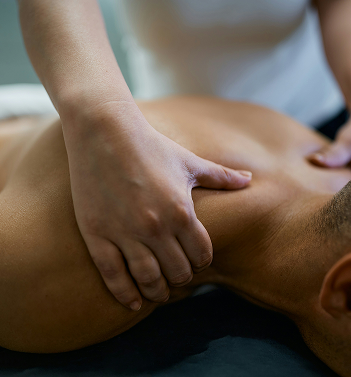
In alignment with best practices, care is inherently multimodal. Treatment incorporates soft-tissue techniques (e.g., deep tissue massage or trigger point therapy) to manage muscular spasm and tension , alongside specific rehabilitation exercises. These exercises focus on strengthening core stabilizing muscles and promoting flexibility, aligning with the flexion-based principles often recommended for LSS.
By combining precision manual therapy with active rehabilitation, Gonstead chiropractic care aims to assist the patient in achieving a greater degree of functional stability and self-management, thereby supporting recovery from the discomfort of spinal stenosis.
8. Your Next Steps
Spinal stenosis is a chronic condition, but seeking timely, expert professional assessment is crucial for establishing an effective management strategy. The goal is not simply temporary pain relief but achieving sustainable symptom control and maximizing functional capacity.
A thorough assessment will determine the specific biomechanical factors contributing to your neurogenic claudication and guide the creation of a precise, safe, and effective treatment plan tailored to your needs.
If you’re in Ringwood or nearby suburbs, our experienced chiropractors can help you find relief and restore movement by identifying the underlying cause of your neurogenic claudication. Book your consultation with Ringwood Chiropractic today.
9. References
- Ammendolia, C., Stuber, K. J., Rok, E., Rampersaud, R., Kennedy, C. A., Pennick, V., Steenstra, I. A., de Bruin, L. K., & Furlan, A. D. (2013). Nonoperative treatment for lumbar spinal stenosis with neurogenic claudication. Cochrane Database of Systematic Reviews, (8). Art. No.: CD010712. DOI: 10.1002/14651858. CD010712.
- Australian Institute of Health and Welfare (AIHW). (2023). Musculoskeletal conditions. Retrieved from https://www.aihw.gov.au/reports/chronic-musculoskeletal-conditions/musculoskeletal-conditions/contents/summary.
- Australian Institute of Health and Welfare (AIHW). (2022). Back problems. Retrieved from https://www.aihw.gov.au/reports/chronic-musculoskeletal-conditions/back-problems.
- National Institute for Health and Care Excellence (NICE). (2020). Low back pain and sciatica in over 16s: assessment and management. NICE Guideline NG59. Retrieved from..
- Wang, J., He, S., & Li, R. (2024). Neurophysiological and Biomechanical Effects of Force-Based Spinal Manipulation on Lumbar Spine. Frontiers in Integrative Neuroscience. doi: 10.3389/fnint.2024.1356564..
- National Institute of Arthritis and Musculoskeletal and Skin Diseases (NIAMS). (2022). Spinal Stenosis. Retrieved from https://www.niams.nih.gov/health-topics/spinal-stenosis.
- Park, D. S. (2023). Lumbar Spinal Stenosis. In StatPearls. StatPearls Publishing. Retrieved from(https://www.ncbi.nlm.nih.gov/books/NBK531493/).
- Robinson, D. A. (2023). Sciatica. In StatPearls. StatPearls Publishing. Retrieved from(https://www.ncbi.nlm.nih.gov/books/NBK507908/).
- Rubinstein, S. M., Van Middelkoop, M., Assendelft, W. J. J., De Boer, M. R., & Van Tulder, M. W. (2011). Spinal manipulative therapy for acute low-back pain. Cochrane Database of Systematic Reviews, (6). DOI: 10.1002/14651858.CD008880.pub2.
- Santilli, V., Beghi, E., & Finucci, S. (2006). Chiropractic manipulation in the treatment of acute back pain and sciatica with disc protrusion: a randomized double‐blind clinical trial of active and simulated spinal manipulations. The Spine Journal, 6(2), 131-137. doi:10.1016/j.spinee.2005.08.019..