
Headaches
We know how debilitating and frustrating headaches can be as they can constantly get in the way of your day to day life and doing the things you enjoy. Headaches are one of the most common complaints and range from sharp shooting pain behind the eyes to dull, throbbing aches that plague your day to day life. Whether they are tension-type headaches, cervicogenic headaches or migraines, more often than not dysfunction in the bones of the neck or upper back can cause or exacerbate symptoms.
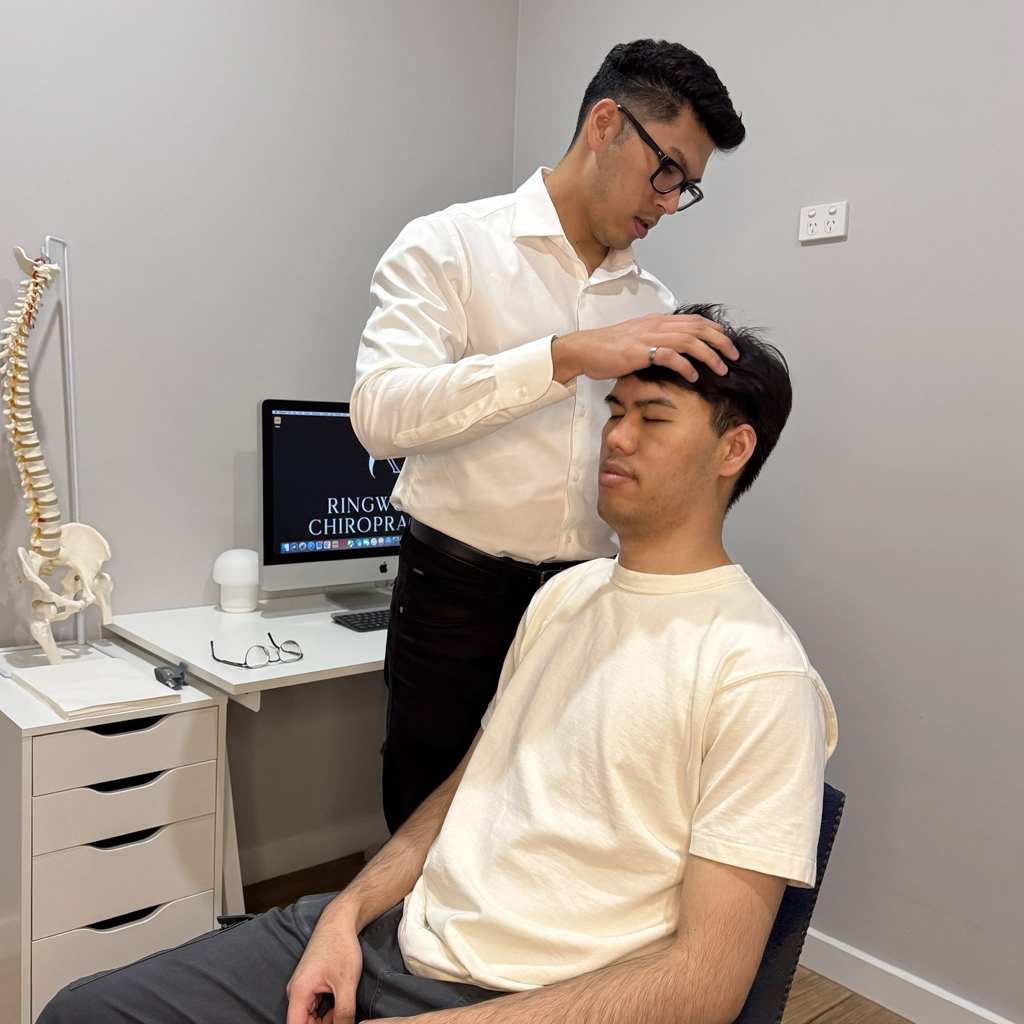
Dr. Jarrett has done extensive training in identifying areas of dysfunction in the neck and back that can cause headaches and is skilled in restoring function and movement to these areas to help relieve even the worst of symptoms. Getting you feeling your best is our only objective and so contact us for a commitment-free over the phone consult or book an appointment with Dr. Jarrett and start thriving.
Cervicogenic Headache
If you suffer from constant, dull headaches that start at the base of your skull and creep forward behind your eyes, you may be experiencing a cervicogenic headache (CEH). This type of pain is fundamentally structural—it originates not in your brain, but from mechanical dysfunction in your neck.
For many people in Ringwood, Croydon, and the Eastern Suburbs, these chronic headaches are often misdiagnosed or attributed to stress alone, leaving the underlying spinal problem uncorrected. The reality is that structural issues in the upper cervical spine (C1–C3) are a significant public health issue, impacting productivity and quality of life. The vast majority of people who experience neck pain tend to develop chronic or persistent symptoms, which often include headaches.
As your local Chiropractor, our clinical approach—led by Dr. Jarrett—offers a distinct advantage. We use the Gonstead System, a highly analytical and specific method designed to bypass the symptoms and meticulously identify the precise joint misalignment in the neck responsible for referring pain to your head. We aim to restore proper nerve function, resulting in lasting relief from Cervicogenic Headaches
What Is a Cervicogenic Headache?
A cervicogenic headache (CEH) is defined as chronic, typically one-sided (unilateral) pain that is referred to the head from a source of dysfunction in the neck. Unlike migraines, CEH is fundamentally caused by a specific physical disorder—such as a joint restriction or a disc issue—in the upper three cervical vertebrae (C1, C2, and C3).
Epidemiology and Risk Factors
Cervicogenic headache is a specific type of chronic headache, most commonly found in adults between the ages of 30 and 44. While its exact prevalence among all headache sufferers is relatively low (estimated between 0.4% and 4%), the frequency of chronic neck pain associated with headaches highlights the broader issue.
Key risk factors for developing the cervical strain that leads to CEH include:
- Female Gender and Stress: High psychological stress and female gender have been found to increase the risk of developing chronic neck pain in populations like Australian office workers.
- Occupational Strain: Prolonged poor posture, especially the forward head posture common during desk work, places sustained mechanical stress on the C1-C3 joints and ligaments.
- Trauma: Previous neck injuries, such as whiplash from motor vehicle accidents, can damage joint capsules and ligaments, leading to chronic joint instability and irritation.
Mechanism of Injury & Pathophysiology: The Nerve Convergence
The reason a problem in the neck causes pain in the head is due to a neurological phenomenon known as nerve convergence at the trigeminocervical nucleus (TCN).
The Trigeminocervical Nucleus
The TCN is a hub in the brainstem that receives sensory input from both the head (via the trigeminal nerve) and the upper three cervical spinal nerves (C1, C2, C3).
When joints or soft tissues in the upper neck are misaligned, restricted, or inflamed (due to a Gonstead subluxation), the C1-C3 nerves relay intense pain signals to the TCN. Because the TCN cannot distinguish the exact source of the signal, it interprets the neck irritation as pain originating from the face, forehead, or behind the eye—the areas typically innervated by the trigeminal nerve. This referred pain mechanism is the signature characteristic of a cervicogenic headache.
Spinal Misalignment (Subluxation)
In the Gonstead System, we understand that chronic joint restriction and nerve irritation often stem from a specific spinal misalignment, or subluxation. In the neck, this misalignment disrupts the optimal movement of the atlas (C1) and axis (C2)—the first two vertebrae that support the skull. Restoring the precise, natural alignment of these segments is vital for stopping the flow of pain signals to the TCN.
Common Symptoms
CEH typically presents with distinct symptoms that differentiate it from tension-type headaches or migraines.
Primary Symptoms:
- Unilateral Pain: Pain is usually felt on one side of the head, and it tends not to switch sides.
- Pain Origin: The discomfort often begins at the back of the head (occiput) or the upper neck and radiates forward to the forehead, temple, or around the eye.
- Aggravation by Neck Movement: Headaches are frequently brought on or worsened by sustained neck postures (like sitting at a desk) or by attempting to move the neck.
- Restricted Mobility: A reduced range of motion, particularly when trying to turn the head.
- Tender Points: Muscle tenderness (pericranial muscle tenderness) is often found in the neck and at the base of the skull on the painful side.
Essential Red Flags (Seek Emergency Care)
While we are experts in mechanical headaches, patient safety is paramount. Certain symptoms associated with headaches require immediate evaluation by a medical doctor or hospital emergency department, as they may indicate a secondary, more serious cause (SNOOP-10 red flags):
- Sudden Onset: The headache comes on like a “thunderclap”—the worst pain of your life developing in seconds.
- Systemic Signs: New headache accompanied by fever, neck stiffness not related to joint pain, or rash.
- Focal Neurological Signs: Headaches accompanied by seizures, loss of coordination, or double vision.
- Change in Pattern: A significant, unexplained change in the pattern of a pre-existing headache.
How Gonstead Chiropractic Can Help
For headaches rooted in mechanical dysfunction, non-pharmacological interventions—specifically manual therapy, manipulation, and exercise—are supported by the best available evidence. The Gonstead System, employed by Dr. Jarrett, offers a superior approach due to its diagnostic precision focused on the upper cervical spine.
The Systematic Gonstead Analysis for CEH
As a specialist cervicogenic headache chiropractor Ringwood, Dr. Jarrett uses the Gonstead 5-step analysis to isolate the exact segments (often C1 or C2) that require correction:
- Instrumentation (Nervo-Scope): A precise instrument is used along the neck to measure temperature variations (heat breaks) that indicate inflammation and nerve irritation at the C1, C2, and C3 levels—the critical nerve roots connected to the headache pathway.
- Visualisation & Postural Assessment: We carefully observe your head carriage, shoulder alignment, and overall posture. Forward head posture and structural imbalances are key indicators of chronic strain on the upper neck joints.
- X-ray Analysis: When clinically necessary, full-spine, weight-bearing X-rays are taken. These provide a foundational blueprint to determine the exact angle and direction of misalignment of the atlas and axis, which is essential for a precise, low-force adjustment.
- Palpation: Our hands-on examination pinpoints the specific joints that are restricted or tender, correlating directly with the nerve irritation found by the instrumentation.
Specific Adjustments for Nerve Relief
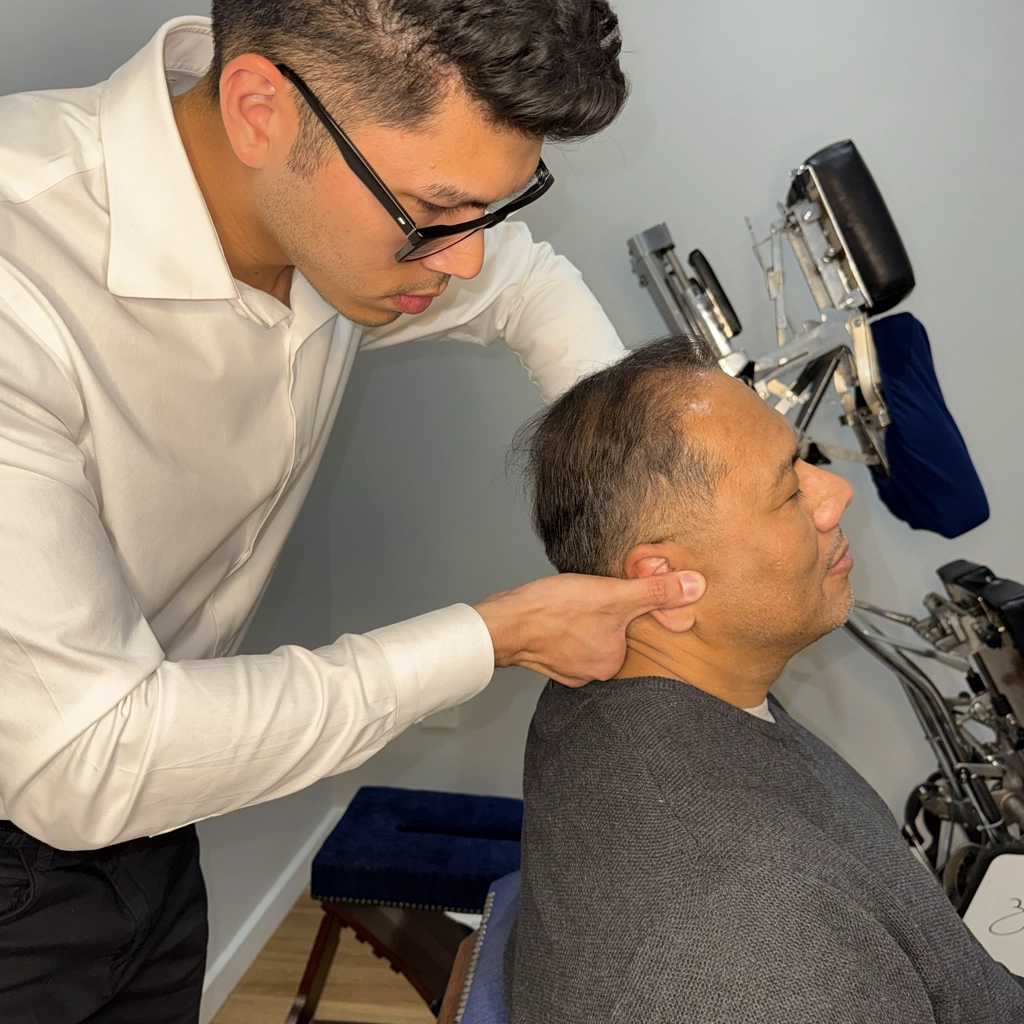
The Gonstead Method is renowned for its specificity. Unlike generalized rotation or twisting motions, the Gonstead adjustment is delivered with targeted, minimal force to correct only the specific misalignment found in the upper neck. For the upper cervical spine (C1/C2), the adjustment is highly precise and may be performed with the patient seated to maximize the efficacy of the correction.
By correcting the subluxation, the Gonstead adjustment aims to:
- Reduce Nerve Irritation: Directly relieve pressure and irritation on the C1-C3 nerve roots, calming the signals being sent to the trigeminocervical nucleus.
- Restore Proper Motion: Increase mobility in the restricted cervical joints, which can immediately reduce the frequency and intensity of neck-related headaches.
- Improve Posture: Stabilize the upper cervical alignment, supporting better head carriage and reducing chronic muscle strain that contributes to recurrent pain.
Clinical evidence supports this targeted approach: Spinal Manipulative Therapy (SMT) has been found to have an effect comparable to commonly used first-line prophylactic prescription medications for tension-type headache and migraine headache, and better than massage for CEH.
Recovery, Management & Prevention
Achieving lasting cervicogenic headache relief involves both specific, corrective care and commitment to ergonomic and postural changes.
Therapeutic Exercise and Posture
Non-pharmacological interventions are the best-evidence approach for the management of chronic neck conditions. Our chiropractic treatment for cervicogenic headache is complemented by advice on:
- Ergonomic Correction: Ensuring your monitor is at eye level or slightly below, and your keyboard is positioned to keep your shoulders relaxed. This prevents the chronic muscle fatigue and forward head posture that load the C1-C3 joints.
- Movement Breaks: Taking frequent, short breaks from prolonged sitting to stretch the neck and upper back
Recovery Timelines
Prognosis for neck pain is generally favourable in the first six weeks, with significant reductions in pain and disability. However, a large proportion of people with neck pain tend to develop persistent, chronic symptoms. Our focus is on providing specific Gonstead care early to prevent this transition to chronicity and to achieve long-term headache relief.
Your Next Steps
If you are suffering from persistent headaches that start in your neck, don’t rely on medication alone to manage the symptoms. Early, precise structural intervention is key to locating and correcting the root mechanical cause.
At Ringwood Chiropractic, Dr. Jarrett specializes in the detailed analysis of the Gonstead System. We are committed to locating the true cause of your pain and providing the highest level of specific, targeted care to restore your comfort and function.
If you’re seeking for a cervicogenic headache Chiropractor, book your initial consultation today to start your journey toward lasting relief.
Conditions we may help with
Ringwood Chiropractic
Paediatric Chiropractor
Chiropractor During Pregnancy
Nerve Pain Issues
Headaches and TMJ Disorders
Knee Discomfort
Tennis/Golfer’s Elbow
Sciatica (Sciatic neuritis)
Carpal Tunnel Syndrome
Back Pain - Upper/Lower
Neck Pain/ Shoulder Pain
Bulged / Herniated Disc
Vertigo (BPPV)
Frequently asked questions
Your questions
answered.
What causes a cervicogenic headache?
Cervicogenic headaches are caused by specific dysfunction or irritation in the joints and nerves of the upper neck (C1–C3 vertebrae). Due to nerve convergence in the brainstem, this neck pain is referred to the head, often felt at the back of the skull, temples, or behind the eyes.
Can Chiropractic help with cervicogenic headaches?
Yes. Spinal manipulative therapy (SMT) is a leading evidence-based treatment for this condition. Studies suggest SMT is effective for cervicogenic and tension-type headaches, working to restore proper joint mechanics in the neck and reduce nerve irritation, which calms the headache pathway.
What makes the Gonstead method different for headache treatment?
The Gonstead system uses a specific, detailed analysis (including instrumentation and X-rays) to pinpoint the exact vertebral misalignment causing the pain. This precision allows Dr. Jarrett to deliver a low-force, highly targeted adjustment that corrects the root cause without excessive twisting, promoting lasting headache relief.
How long does it take to see improvement?
Improvement time varies, but for neck-related conditions, significant functional changes are often seen within the first six weeks of targeted care. Dr. Jarrett will create a personalised care plan after your initial Gonstead assessment to provide realistic recovery timelines based on the chronicity of your condition.
Are there exercises I can do at home for neck-related headaches?
Yes. We recommend consistent posture correction and taking frequent breaks from prolonged sitting. Gentle stretches and exercises focused on stabilising the neck and mid-back are often prescribed to complement your Gonstead adjustments and prevent the recurrence of chronic tension.
Our location
Where we are located
Ringwood Chiropractic
139B Wantirna Road, Ringwood VIC 3134, Australia
Parking Information
Convenient on-site parking is available for patients, with additional spaces located on nearby streets. Please allow a few extra minutes during peak times to find a spot.
Take the First Step Toward Relief
You don’t have to live with pain or discomfort holding you back, your solution is closer than you think.