

Neck Pain
Neck pain is a pervasive global health issue, and for many people in Ringwood, Croydon, and the wider Eastern Suburbs, the stiffness, limited mobility, and recurring tension can severely impact daily life. Neck pain is frequently persistent, often associated with significant levels of disability, and has a tendency to become chronic.
Whether your pain stems from long hours at a computer, poor sleeping posture, or an old injury like whiplash, persistent discomfort demands specific structural intervention. Generalized stretching or temporary medication often fails because it doesn’t address the underlying joint restriction or nerve irritation.
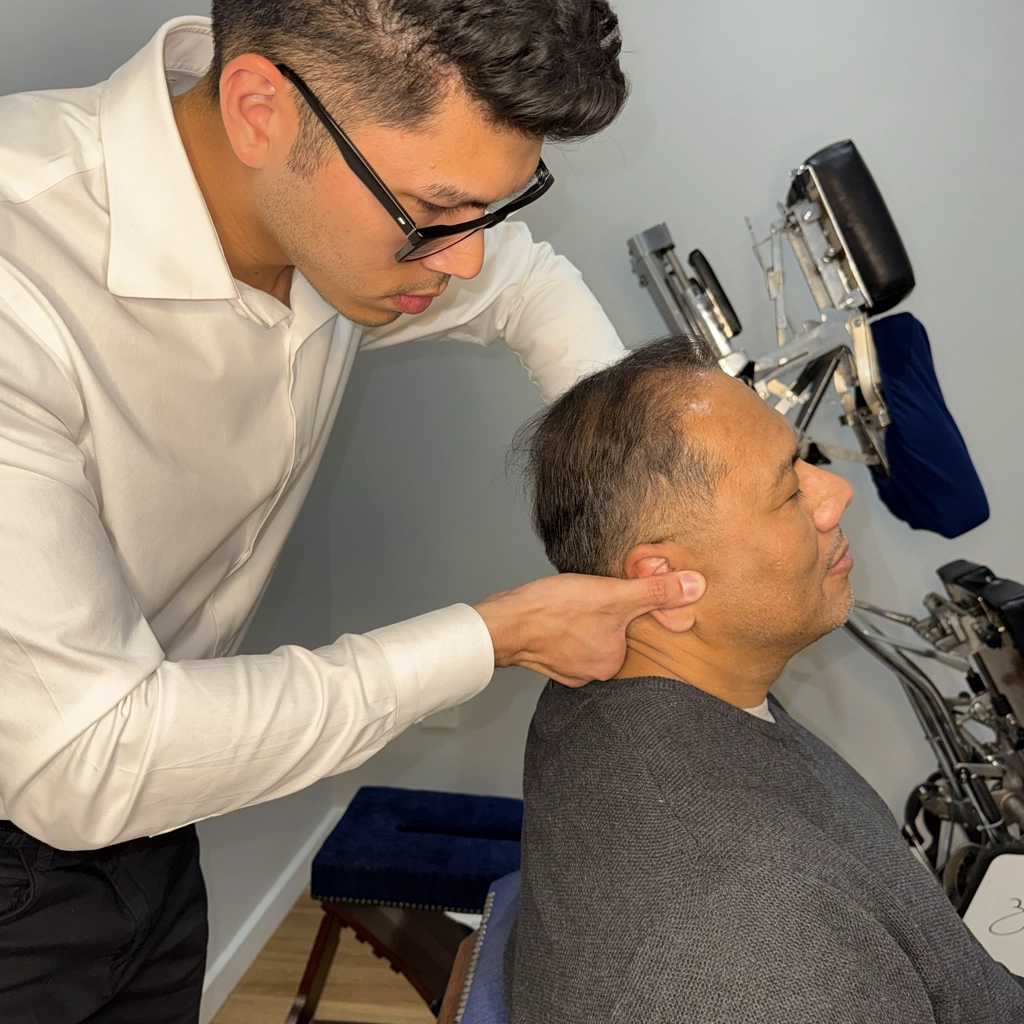
If you are seeking a chiropractic treatment for neck pain that focuses on lasting correction, the approach matters. At our practice, Dr. Jarrett utilizes the highly specific Gonstead System. This method is designed to meticulously analyze the entire cervical spine and locate the precise subluxation causing your pain and stiffness. We aim to restore proper nerve function and optimal alignment, offering a targeted path to neck pain relief Ringwood.
- Wake up pain free
- Move with confidence
- Live without limits
What is Neck Pain?
Neck pain is clinically defined as discomfort perceived between the base of the skull and the first thoracic vertebra (T1). The cervical spine, with its seven vertebrae, is complex, supporting the weight of the head while allowing for vast ranges of motion.
Epidemiology and Risk Factors
Neck pain is highly prevalent worldwide. A large proportion of people who experience neck pain tend to develop chronic or persistent symptoms, indicating that the condition often requires sustained, expert management.
Key risk factors commonly seen in the Ringwood community include:
Neck Pain
Occupational and Postural Strain
Prolonged sitting and maintaining sustained poor posture, such as the “forward head posture” common during device use, place immense mechanical stress on the cervical joints and musculature.
Psychological Stress
High psychological stress may increase the risk of developing neck pain in populations like Australian office workers.
Gender
Female gender has been associated with a higher risk of developing neck pain.
Trauma
Previous injuries, such as whiplash from motor vehicle accidents, can damage ligaments and joints, leading to chronic structural issues.
Mechanism of Injury & Pathophysiology: Joints, Posture, and Nerves
Mechanical neck pain most often results from joint restriction, muscular compensation, or nerve root irritation originating from the cervical spine.
The Problem of Deep Neck Flexor Weakness
Chronic postural strain, particularly the forward head posture associated with long hours of work, causes the deep neck flexor muscles—the neck’s core stabilizers—to weaken. When these deep stabilizing muscles are compromised, larger, superficial muscles (like the upper traps and sternocleidomastoids) are forced to compensate, leading to constant bracing and chronic tension. This tension often results in persistent stiffness that returns quickly, even after stretching, because the underlying structural weakness is never addressed.
Spinal Misalignment (Subluxation) and Nerve Pressure
In the Gonstead System, we focus on finding and correcting the specific spinal misalignment (subluxation) that disrupts optimal joint movement and nerve function. Subluxations in the cervical spine can directly irritate the nerve roots exiting the spinal column, leading to:
Local Pain: Caused by inflammation in the restricted facet joints.
Referred Pain (Headache): Irritation of the upper cervical nerves (C1–C3) can be referred to the head, causing cervicogenic headaches (Tension-type headaches are also mechanically linked to this region).
Radiculopathy: If the misalignment is severe enough to affect the nerve root, symptoms may radiate down the arm (e.g., C6 radiculopathy affects elbow flexion and wrist extension).
Correcting this specific mechanical fault is essential to interrupt the cycle of chronic tension and nerve irritation.

Common Symptoms
Neck pain presents in various ways, often impacting functional movements like turning the head or looking overhead.
Primary Symptoms:
Stiffness and Restricted Motion: Difficulty turning the head fully (e.g., checking blind spots while driving) or looking up/down.
Localized Aching: Pain centred in the side or back of the neck, often extending into the shoulder blade or traps.
Referred Symptoms: Headaches (starting at the base of the skull and radiating forward), or pain/tingling that travels into the arm or hand (radiculopathy).
Positional Aggravation: Pain that worsens significantly after periods of sustained posture (e.g., sitting at a desk or sleeping in an awkward position).
Crucial Clinical Red Flags (When to Seek Emergency Care)
While we specialize in mechanical neck pain, immediate medical evaluation is required if you experience red flag symptoms, as these may indicate a serious underlying condition:
Acute Trauma: Severe neck pain following a high-energy impact, collision, or major fall.
Systemic Signs: Neck pain accompanied by fever, night sweats, or unexplained weight loss (potential infection or non-musculoskeletal pathology).
Myelopathy Signs: Bilateral symptoms (numbness, tingling) in the extremities, hand clumsiness, or sudden changes in walking/gait imbalance (potential severe cord compression).
How Gonstead Chiropractic Can Help
For the management of neck pain, current clinical practice guidelines strongly favour non-pharmacological interventions like manual therapy, specific exercise, and patient education. The Gonstead System provides the most specific and targeted application of manual therapy available.
The Systematic Gonstead Analysis
As a specialist neck pain chiropractor Ringwood, Dr. Jarrett uses the Gonstead 5-step analysis to pinpoint the exact structural interference:
Instrumentation (Nervo-Scope): A precise instrument is used along the neck to measure minute temperature variations (heat breaks). These breaks pinpoint areas of inflammation and nerve irritation related to specific vertebral misalignments, guiding the adjustment location.
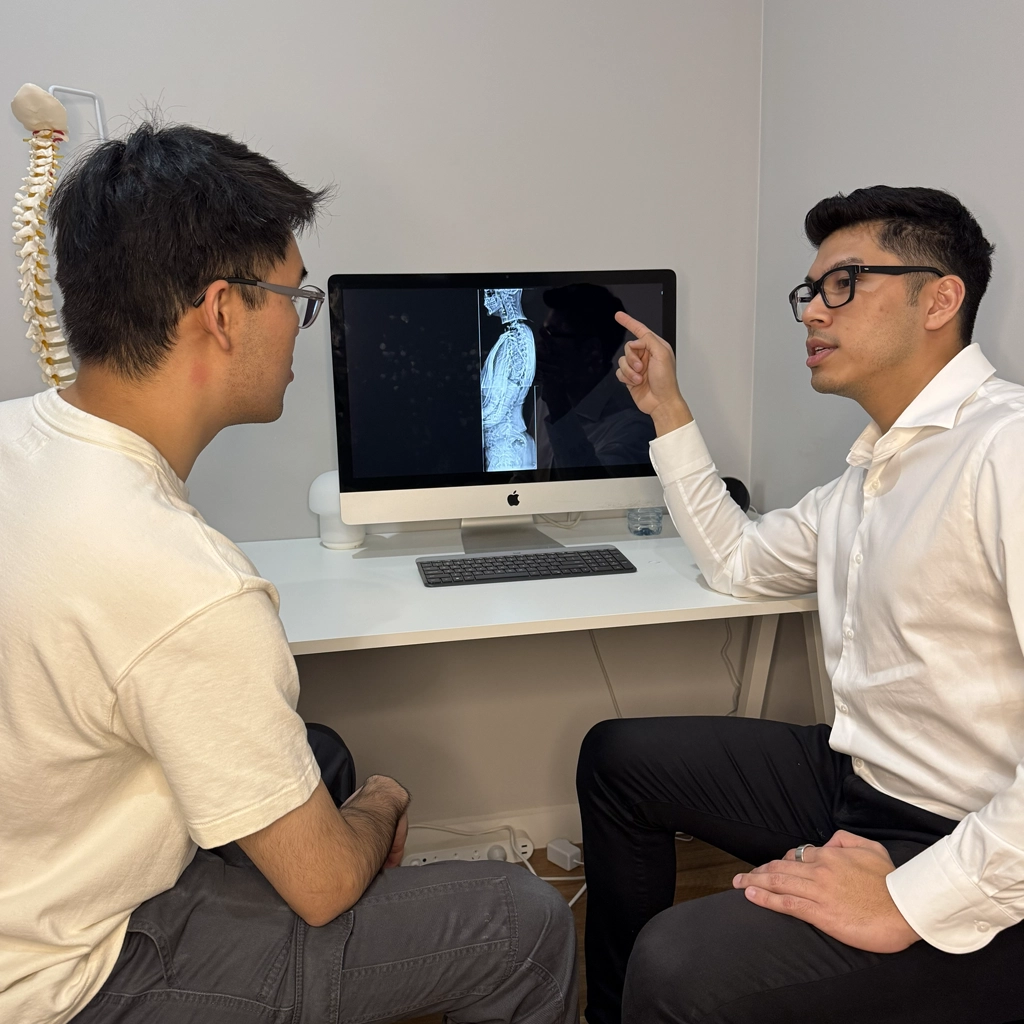
X-Ray Analysis: When clinically necessary, X-rays provide the foundational blueprint, allowing Dr. Jarrett to precisely determine the angle and line of correction needed for the specific subluxation, ensuring the gentlest and most effective adjustment.
Visualisation & Palpation: We observe the patient’s posture (checking for forward head posture) and use skilled hands to confirm joint restriction, swelling, and muscle tightness, correlating these findings with the objective data from the Nervo-Scope.
Specific Adjustments for Causal Correction
The Gonstead Method is renowned for its commitment to adjusting only the specific misaligned segment, often utilizing specialized cervical chairs or drop-piece tables to facilitate a precise, low-force adjustment.
By correcting the subluxation, chiropractic treatment for neck pain aims to:
Relieve Nerve Pressure: Directly reduce irritation on the cervical nerve roots (C1–C7), which is critical for managing referred pain (headache) and radiculopathy.
Restore Joint Motion: Free up the specific restricted joints (facet joints) in the neck and upper back, directly addressing the core mechanical stiffness.
Reduce Muscle Compensation: By correcting the underlying structural fault, the chronic bracing and muscle fatigue driven by the weak deep neck stabilizers are reduced, leading to long-term neck pain relief Ringwood.
Clinical evidence supports this approach, showing that Spinal Manipulative Therapy (SMT) can successfully manage paediatric mechanical neck pain resulting from day-to-day activities with no serious adverse events reported.
Recovery, Management & Prevention
While the prognosis for acute neck pain is favourable in the first six weeks, chronic symptoms often persist. Our goal is to achieve structural correction and prevent the condition from becoming persistent.
Targeted Rehabilitation and Stabilization
Manual therapy must be complemented by targeted rehabilitation. Evidence suggests that strengthening the deep cervical flexor muscles is pivotal in enhancing cervical spine stability and alleviating the burden on adjacent muscles and joints.
Deep Neck Flexor Training: Dr. Jarrett often prescribes motor control training of these deep stabilizers before strengthening the global neck muscles. This strategy is more efficient at reducing pain and disability than conventional treatment alone.
Posture and Ergonomics for Prevention
Recurrence of neck pain is strongly linked to sustained poor posture. Preventative advice includes:
Monitor Height: Ensuring the computer monitor is at eye level or slightly below to prevent forward head posture and constant muscle strain.
Keyboard Position: Adjusting the chair and keyboard height so the shoulders are relaxed, preventing the chronic upward scrunching that leads to tension and shoulder pain.
Your Next Steps
If stiffness, recurring headaches, or radiating pain are controlling your life, don’t delay care. Early, specific structural assessment is key to a faster, more complete recovery.
At Ringwood Chiropractic, Dr. Jarrett specializes in the precise Gonstead System. We are committed to locating the true structural cause of your pain and providing the highest level of specific, targeted care.
If you’re seeking a neck pain chiropractor Ringwood residents trust, book your initial consultation today to start your journey toward lasting relief.
Frequently asked questions
Your questions
answered.
What is the main cause of chronic neck pain?
Chronic neck pain is primarily caused by mechanical dysfunction, such as joint restrictions (subluxations) and chronic muscle tension. Lifestyle factors like prolonged poor posture (e.g., forward head posture while using devices) weaken the deep stabilizing muscles, causing the superficial muscles to overwork and leading to persistent stiffness.
Can chiropractic help with my chronic neck pain?
Yes. Spinal Manipulative Therapy (SMT) is recommended by clinical guidelines for neck pain management. Ringwood Chiropractic’s precise Gonstead approach targets the exact restricted vertebral segment, restoring proper joint motion and reducing the nerve irritation that causes pain and associated headaches.
What makes the Gonstead method different for neck treatment?
The Gonstead system is unique for its specificity. Dr. Jarrett uses objective tools like the Nervo-Scope to detect nerve inflammation and uses X-rays (when clinically necessary) to pinpoint the exact direction and angle of misalignment. This allows for a precise, low-force adjustment that directly corrects the structural issue without unnecessary manipulation.
Do you help with headaches linked to jaw tension or grinding
Yes. The plan may include TMJ care, neck treatment, relaxation strategies, and night guard referral through your dentist when appropriate.
How long does it take to see improvement for neck pain?
Prognosis for neck pain is generally favourable in the first six weeks of specific care, with significant functional improvements often reported. However, avoiding recurrence requires long-term commitment to ergonomic changes and prescribed deep neck flexor strengthening exercises to stabilize the cervical spine.
Do I need strengthening exercises along with the adjustments?
Absolutely. Specific adjustments remove the restriction, but strengthening exercises are vital for prevention. Evidence shows that motor control training of the deep cervical flexor muscles enhances cervical spine stability, which is necessary to prevent the constant muscle tension that brings the pain back.
Our location
Where we are located
Ringwood Chiropractic
139B Wantirna Road, Ringwood VIC 3134, Australia
Parking Information
Convenient on-site parking is available for patients, with additional spaces located on nearby streets. Please allow a few extra minutes during peak times to find a spot.
Take the First Step Toward Relief
You don’t have to live with pain or discomfort holding you back, your solution is closer than you think.